
Reflections from the Autonomize ALIVE Summit
I’ve spent decades in healthcare technology, working at companies including AWS, IBM, and Cisco, as well as small companies trying to make their mark. I’ve helped organizations navigate major technology shifts, and I’ve seen the distance between what technology promises and what it takes to make it useful.
That experience has made me optimistic, but it has also made me more willing to question what we call progress. We have invested enormous resources in healthcare technology, so why do so many people still spend their days chasing information, entering data, and helping patients navigate processes that should be easier (or not even exist at all)?
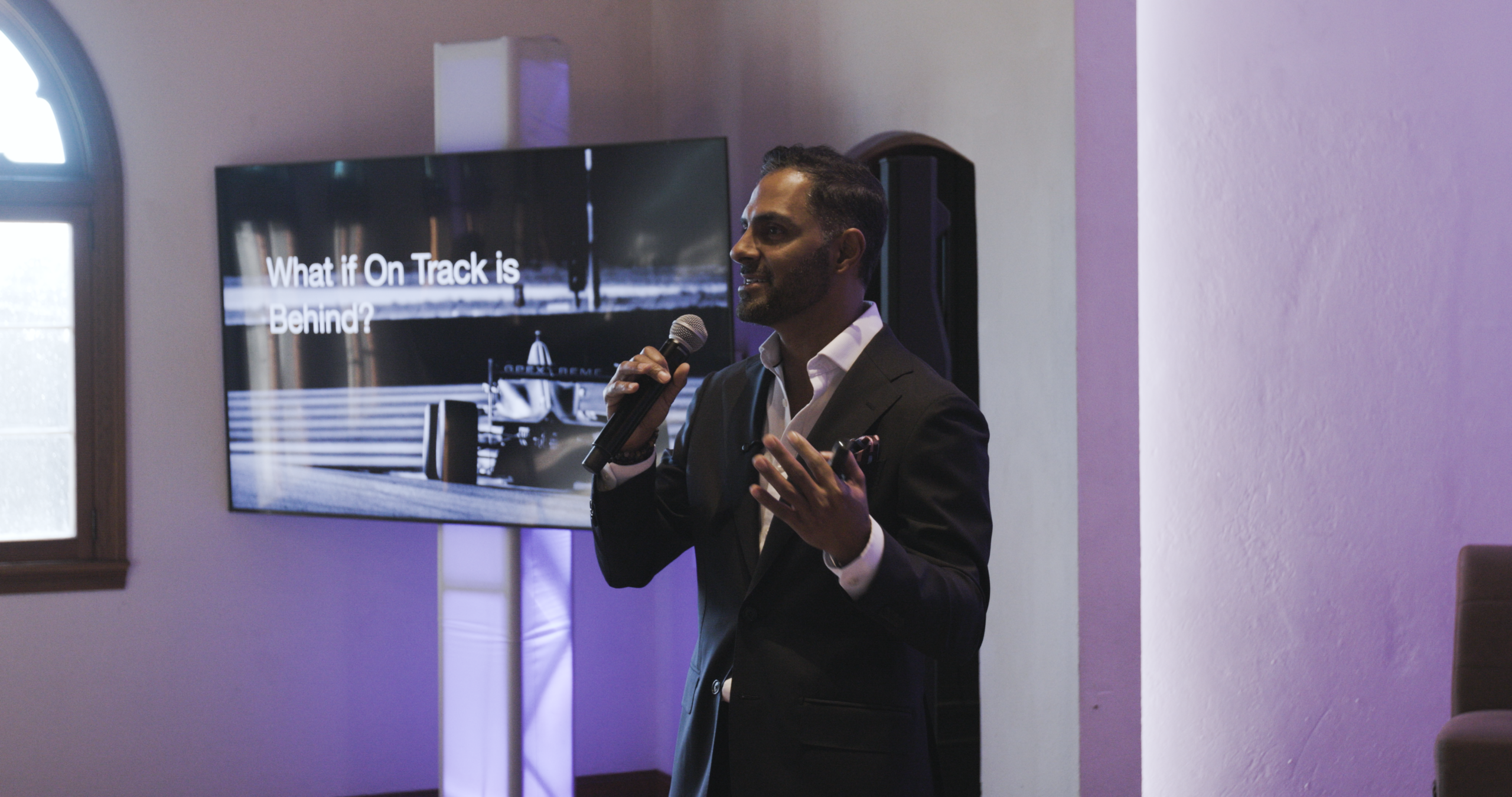
That question was on my mind as I opened Autonomize AI’s ALIVE Summit at the historic Commodore Perry Estate in Austin last week. Our theme was “The Living Enterprise: Reinventing the Business of Healthcare.” For me, the conversation came down to whether we are prepared to change how healthcare operates or simply use AI to make familiar processes run faster.
We Need to Question What We Carry Forward
Over my career, I’ve watched healthcare move from paper records to electronic systems, adopt cloud infrastructure, and connect information that was previously difficult to access. Those advances created important foundations, and I’m proud to have been part of that work.
But I’ve also seen us carry old ways of working into each new generation of technology. We digitize a form without questioning why we need it. We connect systems but preserve the handoffs between departments. We give employees more information while leaving them responsible for finding, interpreting, and moving it.
The result is that talented people still spend too much time making the system work. Patients and members often have to do the same, calling their provider, health plan, and pharmacy to piece together an answer.
AI gives us an opportunity to reconsider those responsibilities. Before we automate a process, we should understand which steps support a necessary decision and which exist because our systems have never been able to do more. Otherwise, we risk becoming very efficient at work we should have eliminated.
A Successful Plan Can Still Take Us In the Wrong Direction
In his keynote, our CEO, Ganesh Padmanabhan, challenged the timelines that shape healthcare transformation. We develop multiyear roadmaps and annual budgets while AI continues to change the possibilities those plans were built around.
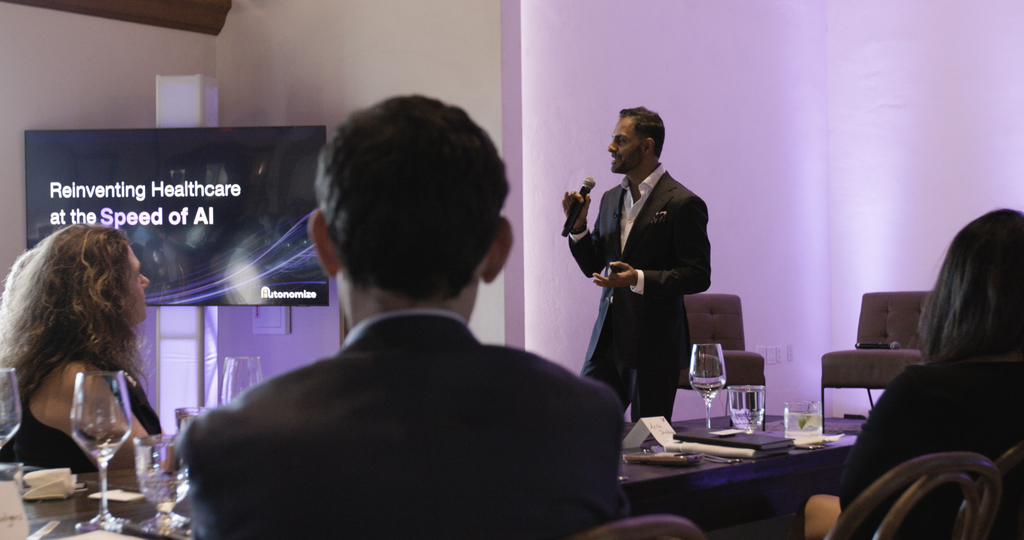
Having spent decades helping healthcare organizations adopt new technology, I understand why this is difficult. Traditional enterprises are built around established processes, annual planning cycles, and clearly defined responsibilities. Those structures provide coordination, accountability, and financial discipline, alongside essential safeguards for safety, privacy, and continuity.
An AI-native enterprise builds the ability to learn and adapt into how it operates. Teams revisit assumptions, use feedback to improve decisions, and redesign work as capabilities evolve. Healthcare organizations will need to make that adaptability part of everyday operations, with clear boundaries, rigorous validation, and human oversight giving them the confidence to change.
Leaders should be continually asking whether they are executing their plans well and whether those plans still address the right problems. Hitting every milestone offers little comfort if the result is an operating model built around constraints that no longer exist.
Changing the Work Requires Changing How We Lead
One reason I joined Autonomize AI is the opportunity to address the administrative complexity healthcare has accumulated over decades. Too often, people compensate for gaps between systems and departments by manually moving information, checking policies, and coordinating handoffs.
An employee might read a document, enter the same information into another system, check the applicable rules, and forward the request. Everyone may be doing their job well, yet the process still consumes more time and expertise than it should.
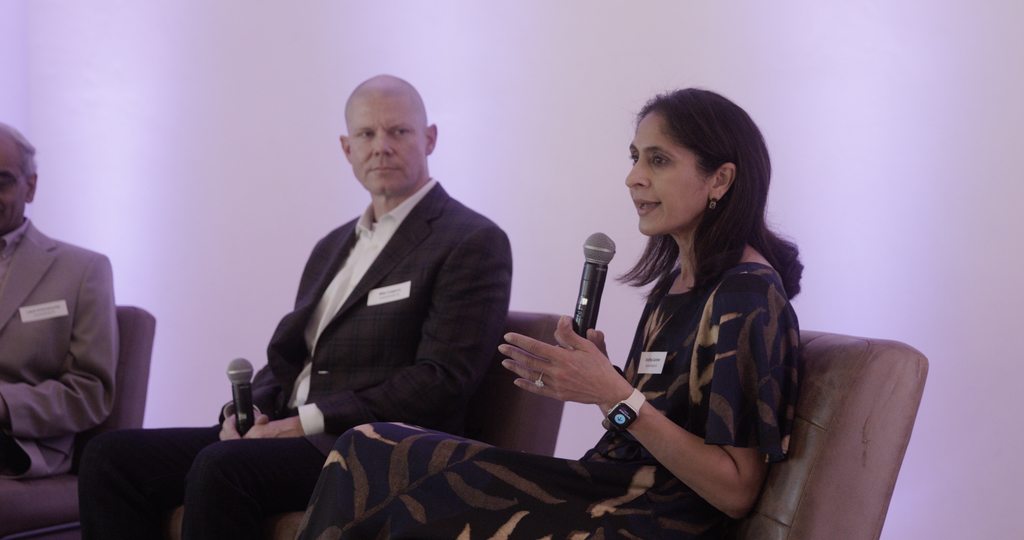
At ALIVE, Mike Longacre, Dr. Sandhya Gardner, and Laksh Krishnamurthy explored what it takes to change that work. Their discussion reinforced something I’ve learned across companies of very different sizes: technology creates value when it is reliable, people can use it effectively, and leaders rethink how work gets done.
Clinical and engineering rigor are essential to that foundation. Clinical expertise defines what good looks like, where errors could affect care, and which decisions require professional judgment. Engineering discipline turns those requirements into systems that can be tested, monitored, and integrated into daily operations, with safeguards and clear paths for intervention.
Leaders must also plan for how people’s responsibilities will change. If AI handles routine intake, how can staff apply their expertise to higher-value work? What preparation will they need? Who will manage exceptions, evaluate performance, and decide when to intervene?
These decisions belong in the transformation plan from the beginning, alongside clinical validation and technical evaluation. Together, they determine whether AI simply improves an individual task or enables a better way for the organization to operate.
Trust Has to Hold Up In Everyday Operations
After several technology cycles, I know that a compelling demonstration is only the beginning. The real test comes when information is incomplete, a request falls outside the expected pattern, or something fails.
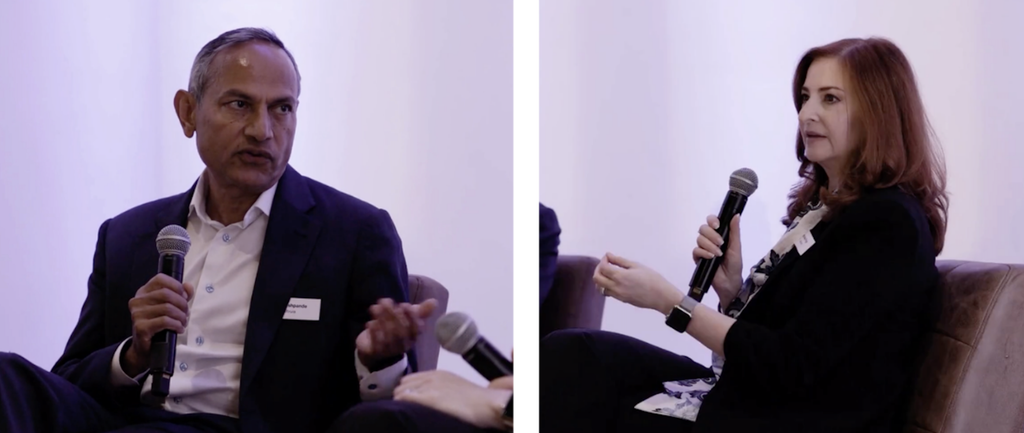
Michele Paige and Sam Deshpande brought that practical leadership perspective to ALIVE, discussing how organizations can deliver measurable value while preserving trust, accountability, and resilience.
As AI takes on more responsibility, people need clear authority and enough visibility to understand what is happening. Teams must be able to evaluate performance, identify problems, and intervene when necessary. These capabilities need to be part of how the organization works every day.
That is why the idea that AI strategy is becoming operating strategy resonates with me. Decisions about AI increasingly shape who does the work, how decisions are made, and how an organization serves its patients and members.
The Conversation is Just Getting Started
Even after decades in healthcare technology, I remain optimistic about what we can accomplish. At Autonomize AI, our vision is to build the AI infrastructure that enables autonomous healthcare operations, freeing people to focus on delivering care. That matters to me because I’ve seen how much more people could contribute if they spent less time compensating for fragmented systems.
ALIVE brought that possibility into focus. The leaders gathered at Commodore Perry brought the experience, candor, and willingness to question assumptions that meaningful change requires. Conversations continued well beyond the sessions, and I left with fresh perspectives, stronger relationships, and renewed conviction about the work ahead.
Thank you to everyone who made those exchanges possible. We’ll keep bringing this community together to share what we’re learning and challenge what comes next. If you missed Austin, I hope you’ll join us next time. Some of the most valuable conversations never make it onto the agenda, and being in the room makes a difference.
About the Author
Jennifer Rouse is Vice President of Marketing at Autonomize AI, where she leads market strategy at the intersection of healthcare, AI, and enterprise technology. With more than 20 years of experience across healthcare, cloud, cybersecurity, and enterprise technology, she previously served as Worldwide Head of Healthcare Marketing at Amazon Web Services and has held leadership roles at IBM, Cisco, and Forrester Research. Jennifer is passionate about the future of AI in healthcare, with a focus on autonomy, compliance, operational transformation, and real-world impact.