
Reflections from Autonomize AI’s Panel of the Legends
What happens when the people who helped build healthcare’s systems and processes recognize that it’s time to fundamentally rethink them?
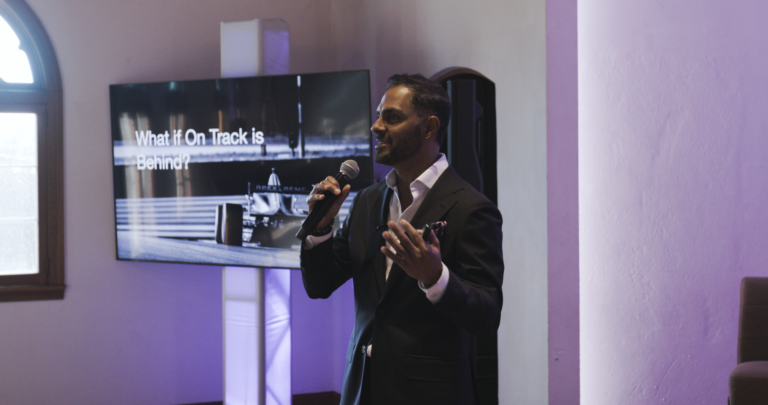
That question captured one of the most compelling moments from Autonomize AI’s recent Panel of the Legends, which brought together six members of our advisory community: Joan Harvey, Chair of the Growth Advisory Board; Dr. Anthony Nguyen, Chair of the Medical Advisory Board; Michele Paige, Advisor; Dr. Pritesh Gandhi, Medical Advisor; Bill Fandrich, Advisory Board Member; and Dr. Brian Anderson, Advisory Board Member.
The discussion explored what excites these leaders about AI, why they believe Autonomize AI has an opportunity to make a meaningful impact, and what it will take to deliver on that promise. But, beyond the technology and business strategy, the conversation raised a more fundamental question: After decades of investing in healthcare innovation, can we finally make the system work better for the people delivering and receiving care?
The Complexity We Created Is Now Ours To Solve
Healthcare’s administrative complexity didn’t emerge overnight, and much of it was created for legitimate reasons. Regulations, safeguards, policies, and processes were introduced to protect patients, manage risk, and ensure accountability. Over time, however, those layers accumulated into a system that can be extraordinarily difficult to navigate.
Joan Harvey offered a particularly powerful perspective. Having spent much of her career in healthcare leadership, including at Evernorth, she acknowledged her own role in helping establish some of the safeguards and processes that now contribute to the industry’s complexity.
Her reflection underscored an important distinction. The original intent of these processes was often sound, but the cumulative effect has created barriers that can keep healthcare professionals from doing their best work and make it harder for patients to access the care they need.
AI creates an opportunity to reconsider how those objectives are achieved. Rather than simply automating every existing step, we can ask whether certain steps are necessary at all. We can preserve the protections that matter while removing the administrative work, fragmentation, and repetitive effort that have built up around them.
This is where AI’s potential becomes more significant than another wave of technology modernization. It gives us an opportunity to rethink the work itself.
Giving People Back the Capacity To Do More
Dr. Anthony Nguyen brought some humor to the discussion with an observation that AI allows him to be “dumber.”
Behind the humor was a serious point. AI can reduce the mental effort required for routine tasks, information gathering, and complex calculations, freeing people to focus their attention on problems that demand greater creativity, expertise, and judgment.
History offers plenty of examples of technologies that fundamentally changed what people could accomplish. Advances in agriculture, computing, and communications didn’t simply make existing activities more efficient. They created opportunities for entirely new kinds of work.
AI has the potential to create a similar shift, particularly in healthcare, where highly trained professionals spend substantial portions of their time on administrative responsibilities.
Consider clinicians who entered medicine to care for patients but now spend hours reviewing documentation, navigating systems, and satisfying administrative requirements. Or care managers whose ability to engage with members is constrained by the time required to gather information and coordinate services.
What becomes possible when we give those professionals more time to apply the expertise they spent years developing?
The opportunity isn’t simply to reduce costs or increase productivity. It’s to restore capacity, professional fulfillment, and human connection to an industry where all three are desperately needed.
The Patient Must Remain At The Center
Throughout the conversation, Michele Paige, Dr. Gandhi, and Dr. Anderson brought the discussion back to the people healthcare exists to serve.
Michele emphasized that the ultimate measure of progress is how members and patients experience the healthcare system. Can they get the information they need? Can they access appropriate care without unnecessary confusion, delays, or frustration? Does the system help them navigate difficult moments, or create additional obstacles?
Those questions are especially important as AI becomes more deeply embedded in healthcare operations.
A faster administrative process is valuable, but speed alone doesn’t necessarily translate into a better experience. The greater opportunity is to connect information, simplify interactions, and make healthcare more responsive to individual needs.
Dr. Gandhi and Dr. Anderson reinforced the importance of applying innovation in ways that improve access, support better decisions, and maintain trust.
AI should not distance healthcare organizations from the people they serve. Done well, it should make the system more accessible, understandable, and human.
Why The People Behind the Technology Matter
The panelists also reflected on why they chose to support Autonomize AI.
A common theme was the company’s AI-native foundation and its ambition to move beyond isolated automation toward transforming how healthcare operates.
But technology alone was not the reason for their confidence.
Bill Fandrich, whose career includes leading large-scale technology and business transformations, emphasized the strength of Autonomize AI’s leadership and advisory community. Meaningful transformation requires more than technical capability. It demands industry expertise, operational experience, sound judgment, and the ability to translate innovation into measurable business outcomes.
The perspectives represented across the advisory community, from clinical medicine and pharmacy to enterprise technology, healthcare operations, and responsible AI, reflect the breadth of expertise needed to address healthcare’s challenges.
Dr. Nguyen’s enthusiasm for AI extends well beyond healthcare, reflecting his belief in the technology’s potential to change how people work and live. That broader perspective reinforces the opportunity to apply advances in intelligence to some of healthcare’s most persistent problems.
The panel served as a reminder that the most meaningful innovation happens when ambitious technology is guided by people who understand the systems, the challenges, and the consequences of getting things wrong.
Transformation Takes Conviction and Patience
The conversation was optimistic, but it was not naive about the challenges ahead.
Healthcare is a complex, highly regulated industry. Trust must be earned, and meaningful change takes time.
Dr. Gandhi emphasized the importance of establishing credibility through execution. Before an organization can fundamentally transform an industry, it must demonstrate that its solutions work, deliver measurable value, and earn the confidence of customers and partners.
That perspective is particularly relevant for a company with ambitions as significant as ours.
There will be setbacks, difficult decisions, and moments when progress feels slower than the opportunity in front of us. The challenge is to remain focused on delivering value today while continuing to build toward a much larger vision.
The advisors expressed confidence in the expertise and commitment of the Autonomize AI team, while reinforcing the importance of resilience, collaboration, and disciplined execution.
Their message was clear: The opportunity is real, but realizing it requires sustained effort.
Maybe We’re Finally At The Turning Point
One of the most striking aspects of the discussion was the perspective of leaders who have spent decades trying to make healthcare better.
They have seen waves of innovation, regulatory change, technology investment, and organizational transformation. They have helped build the systems healthcare depends on today, and they understand both why those systems exist and where they fall short.
Now, many of those same leaders see AI as an opportunity to address challenges that previous generations of technology could only partially solve.
That doesn’t mean the work of the past was wasted. The infrastructure, expertise, safeguards, and institutional knowledge developed over decades remain essential. But we may finally have the ability to use those foundations differently, preserving what matters while removing complexity that no longer serves a purpose.
For Autonomize AI, that is the opportunity ahead.
We’re not simply building technology to help healthcare organizations do more work. We’re working toward a future where unnecessary work can disappear, intelligence can be applied more consistently, and healthcare professionals can spend more of their time doing what they entered the industry to do.
The Panel of the Legends reinforced both the magnitude of that ambition and the responsibility that comes with it.
After decades of trying to make healthcare work better, perhaps the most important question is no longer how much more we can automate, but how much of the burden we can finally take away.
And in doing so, how much more human can we make healthcare.