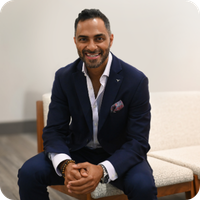

At Becker’s Fall Payer Issues Roundtable in Chicago last week, I joined three health plan leaders on a panel about the future of health plan administration. They run health plans, while my team builds the AI infrastructure plans use, so I came at the conversation from a different angle.
On stage and in the hallway afterward, I kept hearing some version of the same question: If the models are this good, why are so many health plans still stuck in pilots?
My answer is that healthcare doesn’t have a model problem. The models are great, and they get cheaper and better every few months. We run on them, and I’m thankful for that. The problem is everything around the model.
Think about what it takes for an AI agent to help with a real prior auth decision. It has to know the plan’s medical policy, the member’s benefits, the provider contract, and the desk procedure the nurses actually follow. It has to show its work so a regulator can check it. And it has to plug into a claims system somebody built in 1998. Most plans redo all of that from scratch on every project, which is why so few pilots ever make it to production.
We’re Rebuilding Silos, Just with AI This Time
Becker’s editors picked up on a pattern I saw in Chicago. Plans that started with a specific workflow and a financial outcome they could measure are finding ways to scale. Plans that started with a mandate to “do AI” are dealing with pilot fatigue.
Even when the first project works, the way you buy AI can make the second one harder. Buy one tool for prior auth, another for appeals and another for payment integrity, and each one has to learn the same medical policy. Then the policy changes and somebody has to update it in five places. We spent twenty years trying to get rid of silos in healthcare, and here we are building them again.
Give those workflows a common foundation and the work changes. You capture the plan’s rules once, link them back to the source documents and put every agent through the same testing and sign-off process. When a rule changes, every workflow that uses it can pick up the approved update. One of our customers used to spend weeks rolling out a market-wide change to member letters. Now it takes minutes.
Nobody in Chicago Thinks They Can Hire Their Way Through 2027
The mood in the room wasn’t relaxed, and for good reason. Eighteen payers are leaving the individual Medicare Advantage market for 2027, and about 6.3 million beneficiaries are facing terminations or crosswalks this enrollment period. Medicaid work requirements kick in in January, and CMS expects 2.3 million fewer enrollees in the first year alone. ACA marketplace enrollment dropped from 24.2 million to roughly 19 million once the enhanced subsidies went away.
On top of that, payers now have to publicly report denial rates, the FHIR prior auth API is due on January 1, and fraud cases, ghost network crackdowns, and STARs challenges are all landing at the same time. Every line of business is getting squeezed at once.
I keep coming back to the work itself. Every approval, denial, payment and outreach call shapes how quickly people get care and what it costs. A prior auth that sits for five days can leave a member waiting for treatment. Catch a questionable claim after it’s paid and somebody has to chase the money.
My favorite story from Becker’s came from North Carolina’s State Health Plan. The team shared that it had turned off prior auth for its primary care partners and saw no measurable cost impact. That’s the kind of evidence I’d want when deciding where review helps and where it adds another step. You need to know which rules are in play and be able to see what happens when you change them.
Ten Agents Per Member
The part of the panel I enjoyed most was talking about what happens when members show up with AI of their own. I think the biggest change coming to plan administration will come from outside the plan.
Members are going to have their own AI agents. One agent to compare plans at open enrollment. One to chase down a prior auth. One to fight a surprise bill. One to help manage a parent’s medications. My guess is we’ll get to around ten per person within a few years.
Those agents won’t wait on hold until Monday morning. They’ll ask more questions in a week than a member asks in a year, and they’ll expect an answer right away. If a benefit document says one thing and the medical policy or provider contract says another, the first agent will find the gap. So will the next thousand that ask the same question.
Most plans today are set up for a person calling a call center between 8 and 5, and that’s not going to hold up.
The thing is, an agent can only be as good as the information behind it. If a plan’s benefit documents, medical policies and contracts disagree with each other, the member’s agent will find every one of those gaps, fast, and at scale. The plans that come out ahead will have:
01 / One source of truth
One Version of the Rules
One version of their benefits, policies and SOPs that both their own agents and outside agents get answers from.
02 / Traceable answers
A Source on Every Answer
A source attached to every answer, so a member’s agent, or a regulator, can check it.
03 / Real-time access
APIs, Not Portals and Fax
Real-time APIs instead of portals and fax lines. The 2027 FHIR APIs are a start, not the finish line.
04 / Identity and consent
Clear Rules for Acting on a Member’s Behalf
Clear rules on identity and consent when an agent is acting for a member.
People Still Make the Call
None of this is about pulling people out of decisions. Becker’s shared that about two-thirds of consumers don’t trust clinical information from AI, and the number is even higher in behavioral health. I don’t blame them.
Where AI is really working right now is the unglamorous admin work: reading a 300-page record, drafting a letter, checking eligibility across three systems. A clinician still makes the call on anything that affects someone’s care. That’s how we build at Autonomize, and it’s what we run in production today at four of the largest health enterprises in the country.
Thanks to Becker’s, my co-panelists, and everyone who grabbed me in the hallway afterward. If we didn’t get a chance to talk in Chicago, reach out. I’d love to hear how you are thinking about all this.
About the Author
Ganesh Padmanabhan is the CEO and founder of Autonomize AI, where he is building AI-native solutions for healthcare enterprises. With over 20 years of experience across AI, cloud, and enterprise transformation, he focuses on embedding governed intelligence into workflows to improve outcomes and reduce operational friction. A recognized voice in responsible AI and healthcare innovation, Ganesh is a frequent speaker, advisor, and advocate for using technology to tackle humanity’s biggest challenges.